






The implant
The implant is a long-acting reversible birth control (LARC) method that lasts approximately three years. It consists of a tiny plastic rod inserted under the skin of the upper arm, releasing small amounts of progesterone to prevent pregnancy. It's over 99% effective if replaced every three years.
One of the primary advantages of the implant is its long-lasting nature, making it a hassle-free method that won’t require daily or monthly management. It can also help regulate your hormones, potentially reducing perimenopausal symptoms like mood swings and hot flashes.
However, some women may experience irregular bleeding as a side effect of the implant. This can make it difficult to track hormone levels and menstrual patterns during perimenopause.
The injection
The contraceptive injection, known commonly by the brand name 'Depo-Provera’, is a LARC that lasts 8-13 weeks. Compared to other LARCs, it requires repeat injections every few months. It contains the active drug medroxyprogesterone acetate (MPA), which is a synthetic version of progesterone.
MPA can help relieve some menopausal symptoms and lighten your periods. But some studies have found that MPA can negatively impact bone density and estrogen levels.
Perimenopausal women already face the risk of bone fractures and osteoporosis, due to declined estrogen levels. MPA may further lower estrogen levels and bone density, possibly increasing your risk of osteoporosis. This was found in a study where women using MPA had a significant decrease in bone density, although the results did find the density returned to pre-MPA levels after discontinuation.
However, another study concluded that the use of MPA during menopause did not result in decreased bone density. Ultimately, individual responses to MPA can vary, so it’s hard to predict how MPA will affect you.
The hormonal coil
The hormonal coil or intrauterine system (IUS) is another LARC method that can last three to eight years, depending on the brand. It’s a plastic T-shaped device that's inserted into your uterus and is over 99% effective in preventing pregnancy. It comes in three doses: 13.5 mg, 19.5 mg and 52 mg, allowing flexibility to adjust the dose to your individual needs.
An IUS can be particularly beneficial for perimenopausal women experiencing heavy menstrual bleeding. Its ability to decrease endothelial growth leads to lighter, pain-free periods. One study showed that perimenopausal women using the IUS experienced a significant reduction in heavy periods compared to those using MPA.
Furthermore, depending on the brand, some IUS, such as the Mirena coil, can offer both contraceptive and HRT effects. This allows you to get the benefits of HRT while simultaneously having effective pregnancy protection.
Progesterone-only pills
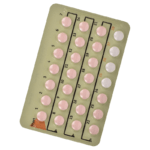
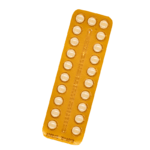
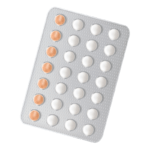
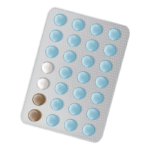
Progesterone-only pills (POP), also known as mini-pills, are progestin-only pills suitable for individuals who can’t take estrogen. They need to be taken daily, which can be slightly less convenient than other progesterone-only methods. Mini pills come in various doses and with different active ingredients, so if one doesn't work well for you, there are other options that you can try.
For menopausal women who cannot use estrogen, mini pills offer a safer alternative with a lower risk of high blood pressure, blood clots, and stroke compared to combined hormonal contraceptives. Additionally, POPs are less likely to cause estrogen-related side effects such as breast tenderness, bloating, and headaches, making them more tolerable for some individuals.
However, mini pills may be less effective in managing menopausal symptoms due to the lack of estrogen. So you might not notice much improvements in your menopausal symptoms, such as vaginal dryness.