Our clinician will recommend treatment based on the info in your consultation. Actual price may differ according to the treatment and plan you purchase.
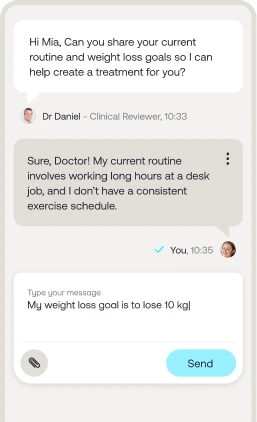
This is healthcare on your terms.
All from the comfort of your device. Get access to what you need, when you need it.
100% online
Ask questions and get expert recommendations, at the touch of a button.
Tailored choices
We'll narrow down some treatments for you to choose from based on your medical profile.
Express delivery
Receive your treatment by secure delivery, in discreet packaging.
Repeats made easy
Set your own delivery schedule and pause or make changes any time you like.
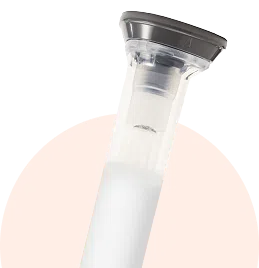
Ozempic is a pre-filled injection pen used as a treatment for type 2 diabetes in adults. It contains the active ingredient semaglutide, which increases insulin production to help keep your blood sugar under control.
It also reduces appetite. Beause of this effect, Ozempic is sometimes prescribed “off-label” for weight management. However, in Canada, Ozempic is only officially approved for the treatment of type 2 diabetes. A different brand, Wegovy, which contains a higher dose of the same active ingredient (semaglutide), is specifically approved for chronic weight management.
You only need to take Ozempic once a week, and it works best alongside a healthy diet and regular exercise. You’ll normally start on a low dose and may increase it over time. Ozempic is a subcutaneous injection that goes under the skin on your thigh, stomach, or upper arm.
How does Ozempic work?
Semaglutide (the active ingredient in Ozempic) is almost identical to GLP-1, a hormone that’s made naturally in your gut and released after you’ve eaten. It regulates appetite and insulin secretion and slows down the rate your stomach empties. This gives a longer sensation of fullness, which means you don’t feel as hungry.
Semaglutide lowers blood sugar by helping your body to make more insulin and preventing your liver from producing excess glucose. By slowing down the passage of food out of the stomach, it also slows down the rate your body takes up sugar from the food you eat.
What doses of Ozempic are there?
Ozempic is available in several different doses, typically administered from pens that can deliver 0.25 mg, 0.5 mg, 1 mg, or 2.0 mg per injection. When you take it for diabetes, the dose you’re prescribed will depend on your treatment plan. Patients usually start on the lowest dose (0.25 mg) once a week for the first month. This may be increased to 0.5 mg. If more blood sugar control is needed, your doctor may increase the dose further to 1.0 mg or 2.0 mg
If you’re unsure which dose is right for you, your healthcare provider will determine the correct amount to manage your condition.
This page was written by The Treated Content Team.
This page was medically reviewed by Dr Daniel Atkinson on May 13, 2024. Next review due on May 13, 2027.
How we source info.
When we present you with stats, data, opinion or a consensus, we’ll tell you where this came from. And we’ll only present data as clinically reliable if it’s come from a reputable source, such as a state or government-funded health body, a peer-reviewed medical journal, or a recognised analytics or data body. Read more in our editorial policy.
OzempicSemaglutide
How to use Ozempic
It’s important to use Ozempic exactly as your doctor has told you to. Always read the patient information leaflet provided with your medication before you use it for the first time, and if you’re not sure about anything, ask your doctor or pharmacist for help.
The starting dose is normally 0.25mg once a week for four weeks.
After four weeks your doctor may increase the dose to 0.5mg once a week.
If your doctor doesn’t see any improvement in your blood sugar levels with the 0.5mg dose, it might be increased to 1mg or eventually 2 mg.
Inject Ozempic under the skin. Don’t inject it into a vein or muscle.
The best places to inject Ozempic are the front of your thighs, the front of your waist or your upper arm.
Inject once a week, and on the same day each week if possible.
The day of the week that you use it on can be changed – as long as you have at least three days between doses. After you choose a new day, the once-weekly dose should be continued.
It can be taken any time during the day, regardless of meals.
Always check that the solution in your pen is clear and colorless. Don’t use it if it looks cloudy or if the pen has been frozen.
Your pen should only be used by you (and no-one else).
Before using Ozempic for the first time your doctor or nurse will show you how to use it.
These instructions are for the approved use of Ozempic for type 2 diabetes. If a doctor prescribes Ozempic off-label for weight loss, they will provide specific instructions.
How long does it take Ozempic to work?
Ozempic works differently for different people, and it might depend on the dose. In clinical trials, it took four to five weeks for Ozempic to reach a level of ‘steady state exposure’ in the body (which basically means having a continuous supply of the drug in the system). [1]
Clinical trials also showed that 46% of people using the 0.5mg for a year lost up to 5% of body weight, and 13% of people using it lost up to 10%. In people using the 1mg dose for a year, 62% lost up to 5% of body weight and 24% up to 10% of body weight. [1]
What should I do if I make a mistake when using Ozempic?
If you forget to take your dose, and it’s been five days or less, take the dose when you remember. Continue with your next dose on your scheduled day. If it’s been more than five days, skip the dose and continue with the next dose on your scheduled day. Don’t take a double dose to make up for the missed one.
If you accidentally take a higher dose than normal, or than you’ve been prescribed, let your prescriber know as soon as possible. You may get nausea if you take more Ozempic than you should.
Treated trusted source:
Electronic Medicines Compendium (eMC). Ozempic 1 mg solution for injection in pre-filled pen – Summary of Product Characteristics (SmPC) – (emc). [online]
This page was written by The Treated Content Team.
This page was medically reviewed by Dr Daniel Atkinson on May 13, 2024. Next review due on May 13, 2027.
How we source info.
When we present you with stats, data, opinion or a consensus, we’ll tell you where this came from. And we’ll only present data as clinically reliable if it’s come from a reputable source, such as a state or government-funded health body, a peer-reviewed medical journal, or a recognised analytics or data body. Read more in our editorial policy.
OzempicSemaglutide
Ozempic isn’t suitable for everyone, and there are some things that you need to be aware of when using it.
Here’s all the official info on it. If anything is unclear, let our clinician know, and they can talk with you about it
OzempicSemaglutide
Ozempic: FAQ
Have something specific you want to know? Search our info below, or ask our experts a question if you can’t find what you’re looking for.
How important is diet while using Ozempic?
Answer:
The food you eat plays a huge part in any weight loss program. A healthy, balanced diet can help you reduce your caloric intake, which in turn helps you lose weight.
Ozempic should be taken as part of a plan that involves better eating and increased exercise. In other words, the pens aren’t a magic bullet and are intended to support your healthy lifestyle choices.
How effective is Ozempic for weight loss?
Answer:
While Ozempic is approved for diabetes, its active ingredient, semaglutide, has been extensively studied for weight loss. The SELECT trial, conducted by the manufacturer Novo Nordisk, looked at patients with overweight or obesity (but without diabetes). The study showed that semaglutide was associated with significant and sustained weight loss over a four-year period. These studies led to the approval of Wegovy, the brand name for semaglutide specifically for weight loss.[1]
Do I need a prescription for Ozempic?
Answer:
Yes, Ozempic is a prescription-only treatment in Canada. This means that it’s not available over-the-counter. If you want to use Ozempic, you’ll need to speak to a licensed healthcare provider first. They’ll decide if it’s a treatment that is suitable for you.
Is Ozempic similar to any other treatments?
Answer:
Rybelsus is another treatment for type 2 diabetes that contains the same active ingredient, semaglutide. It comes as a daily tablet rather than a weekly injection.
Wegovy contains a higher dose of the same active ingredient, semaglutide, and is specifically approved for weight loss.
Saxenda and Victoza are also injectable medications used for weight loss and diabetes, respectively. Their active ingredient is liraglutide, which is similar to semaglutide but is taken once a day.
Which dose of Ozempic should I use?
Answer:
You’ll normally start on the 0.25 mg dose once a week and move up to the 0.5 mg dose after a month. Your doctor may increase the dose to 1.0 mg or 2.0 mg if needed for blood sugar control. After a consultation, your doctor will prescribe the dose that is most appropriate for you.
How is Ozempic different to other weight loss or diabetes treatments?
Answer:
Ozempic tends to be used when other drugs like metformin haven’t worked well enough at controlling blood sugar. It can sometimes be used in conjunction with these treatments.
Unlike other antidiabetic drugs, Ozempic works for a long time, so you only need to take it once a week, while other diabetes treatments often need to be used daily. Some weight loss treatments containing Orlistat also need to be taken every meal time, three times per day. So Ozempic is a much less frequent treatment in comparison.
Clinical trials [2] have shown that Ozempic significantly decreases blood sugar levels in hemoglobin compared to other treatments.
Treated trusted source:
Ryan, D.H., et al (2024). Long-term weight loss effects of semaglutide in obesity without diabetes in the SELECT trial. Nature Medicine, pp.1–9.
Our experts continually monitor new findings in health and medicine, and we update our articles when new info becomes available.
Why this page was updated on Jul 29, 2025
Content checked and updated as part of our 3-yearly periodic review, to ensure accuracy and currentness.
Current version (Jul 29, 2025)
Edited by: The Treated Content Team.Medically reviewed by: Dr Daniel Atkinson, GP Clinical lead
Aug 01, 2022
Published by: The Treated Content Team.Medically reviewed by: Dr Daniel Atkinson, GP Clinical lead
How we source info.
When we present you with stats, data, opinion or a consensus, we’ll tell you where this came from. And we’ll only present data as clinically reliable if it’s come from a reputable source, such as a state or government-funded health body, a peer-reviewed medical journal, or a recognised analytics or data body. Read more in our editorial policy.
We're making healthcare more about you. Sign up to our newsletter for personalised health articles that make a difference.
Dr Daniel Atkinson
GP Clinical lead
Dr Daniel is our Lead Doctor, based in the UK. He doesn’t prescribe for our Canadian patients, but often reviews medical content across the site to make sure it's clinically accurate. On specific pages he's reviewed you'll see his reviewer card.
When we present you with stats, data, opinion or a consensus, we’ll tell you where this came from. And we’ll only present data as clinically reliable if it’s come from a reputable source, such as a state or government-funded health body, a peer-reviewed medical journal, or a recognised analytics or data body. Read more in our editorial policy.
Reviews you can trust
All of our reviews are collected from real patients after their treatment has been delivered.
We publish reviews collected through independent platforms including Reviews.io and Trustpilot.